
2025 Annual Report to the Community
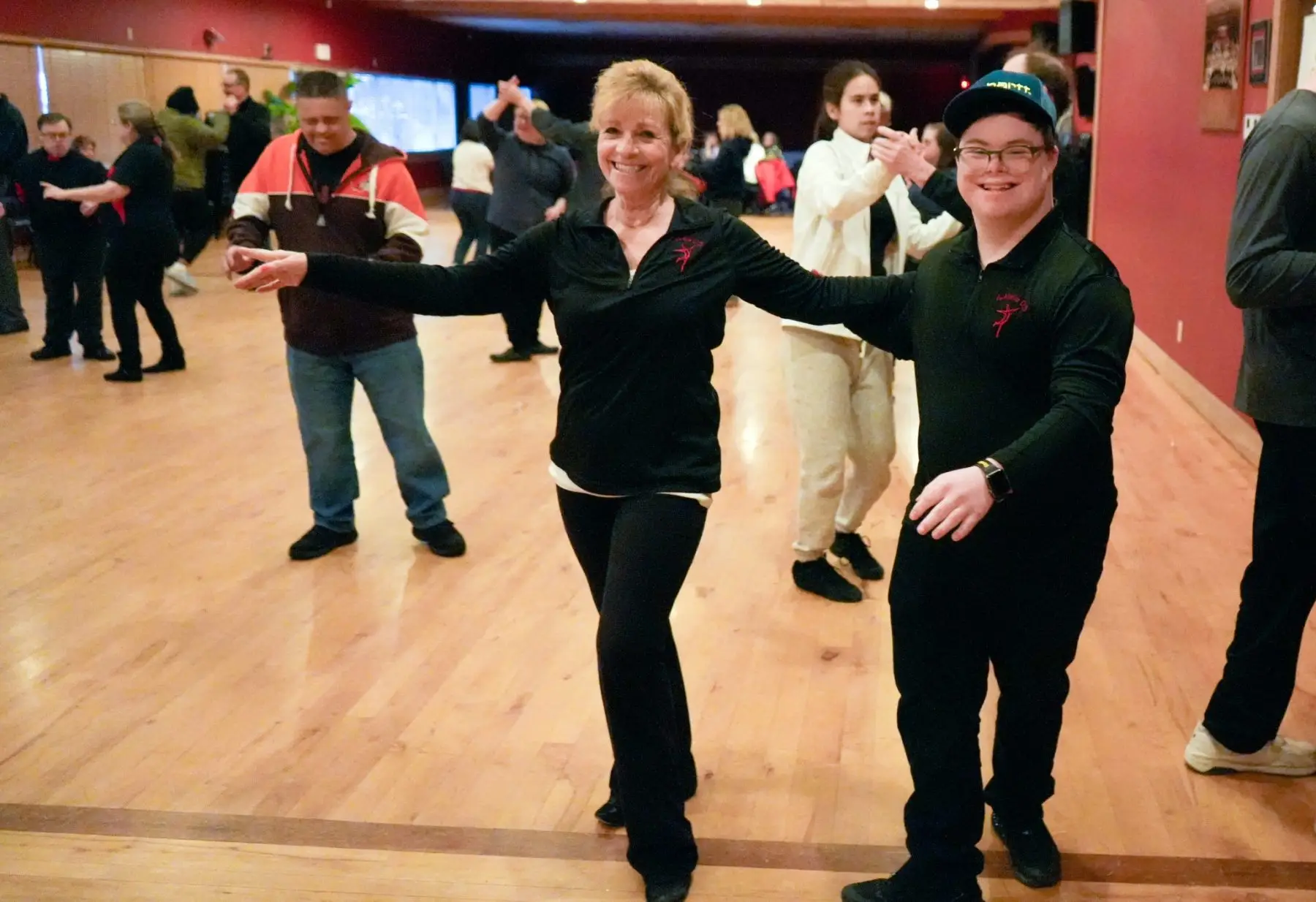
“Jay, do you want to dance?” asks Maddy Scott. “What’s next?” he replies with a smile. Scott is one of more than 30 people filling a Sharonville dance studio on a snowy February evening.
On Wednesdays, adults with disabilities get together for an hour at A-Marika Dance Company. Owner Mary Ramirez-Cook demonstrates the steps for each different style. Then, students and volunteers dance their way around the studio when the music starts.
Samuel Meyers loves to do the swing and tango. Samantha Chacksfield likes rumba. Mathew Cook, Mary’s son, says his favorite is merengue.
Ramirez-Cook is passionate about dancing—it’s something she’s been doing since she was 3 years old. After having children, she became a ballroom dance instructor for Fred Astaire Dance Studio and then Arthur Murray Dance Studio.
In 2000, Ramirez-Cook decided to venture out on her own and founded A-Marika Dance Company. The name, pronounced like America, combines her name, Mary, and Erica, the name of her daughter.
Mathew, her youngest child, was born with Down syndrome and was always at the dance studio with her. “This was a whole new road for me,” she said. “He loved to dance, and it inspired me to start a very small program for young adults with Down syndrome.”
Ramirez-Cook said Dancing Stars began with five students. Now they’ve grown to more than 60 people with different disabilities who regularly attend.
Meyers has been coming to A-Marika for 12 years. His mom, Susan, said he loves the class and looks forward to it each week. “It’s a great social opportunity, and he knows all the dances,” she said. “Mary has a great rapport with the students.”
Alyssa Smith has been attending for two years. “My favorite style is tango,” she said, adding that she likes the freedom to add her own flair. “Don’t be afraid to get creative with the dances! You can do the steps, but you can add your own moves, too.”
Chacksfield has been coming for at least five years and likes how dance class lets her try new things. “People try to tell me what I can’t do, but I can,” she said. “Disability doesn’t matter.”
Ramirez-Cook said she makes a few adaptations to teaching different dances, sometimes simplifying instructions or sharing an alternative step. She also has a modified hula hoop that attaches to wheelchairs so all people can participate.
At every class, other dancers volunteer to share their time and talent for cha cha, waltz, foxtrot and other dances. “It’s so much fun,” said volunteer Amy Meiser. “I love how it’s simple steps and everyone can do it.”
Classes cost $5 and all the proceeds go to the A-Marika Dancing Stars foundation, which helps students offset costs for costumes or entry fees to local dance competitions.
For new students, Ramirez-Cook likes to tell parents and caregivers that it’s more than just dance. “It’s about learning appropriate behavior, seeing their peers, and developing friendships,” she said. “It’s a safe zone, where everyone can be happy and carefree.”


